


Mental Math Game
Mental Math Game
 Turn math practice into a game
Build speed and accuracy across all 4 operations
Challenge that grows with them through 24 progressive levels
Couldn't load pickup availability

Mental Math Game


The first math practice tool that makes kids ask for more time
Most math practice tools ask children to sit still and get through it. This device makes them want to come back. There's a real difference between a child who practices math because they're told to and a child who practices because they're chasing their own high score — and this device is built around that difference. You'll watch them stop dreading practice and start competing with themselves, pushing to the next level, asking for one more round before dinner. That shift from avoidance to appetite is exactly what separates children who fall behind in math from children who build real fluency.

Stop making up problems. Start watching them chase the next level
The first session feels like any other math practice. By the third session your child has stopped counting on their fingers and started calculating on instinct — because the timed challenges don't give them space to do anything else. By level five they're moving faster than you'd expect and asking what's on level six. By level ten they're correcting their own mistakes mid-problem and not stopping until they've beaten their last score.
That's the point of this device. You're not just giving your child math practice — you're building the calculation speed, mental fluency, and competitive confidence that changes how they show up in every math class from here forward. And when they crack level 24, they'll want to do it faster.
What parents found
94%
of parents said their child's calculation speed noticeably improved within the first three weeks of regular use
92%
said their child began practicing math independently — without being prompted — after the first week
96%
said it was more effective at building math engagement than any worksheet, flashcard set, or app they'd previously tried
Based on clinical study and consumer perception survey. Individual results may vary.
Real People. Real Results.
-

2h ago
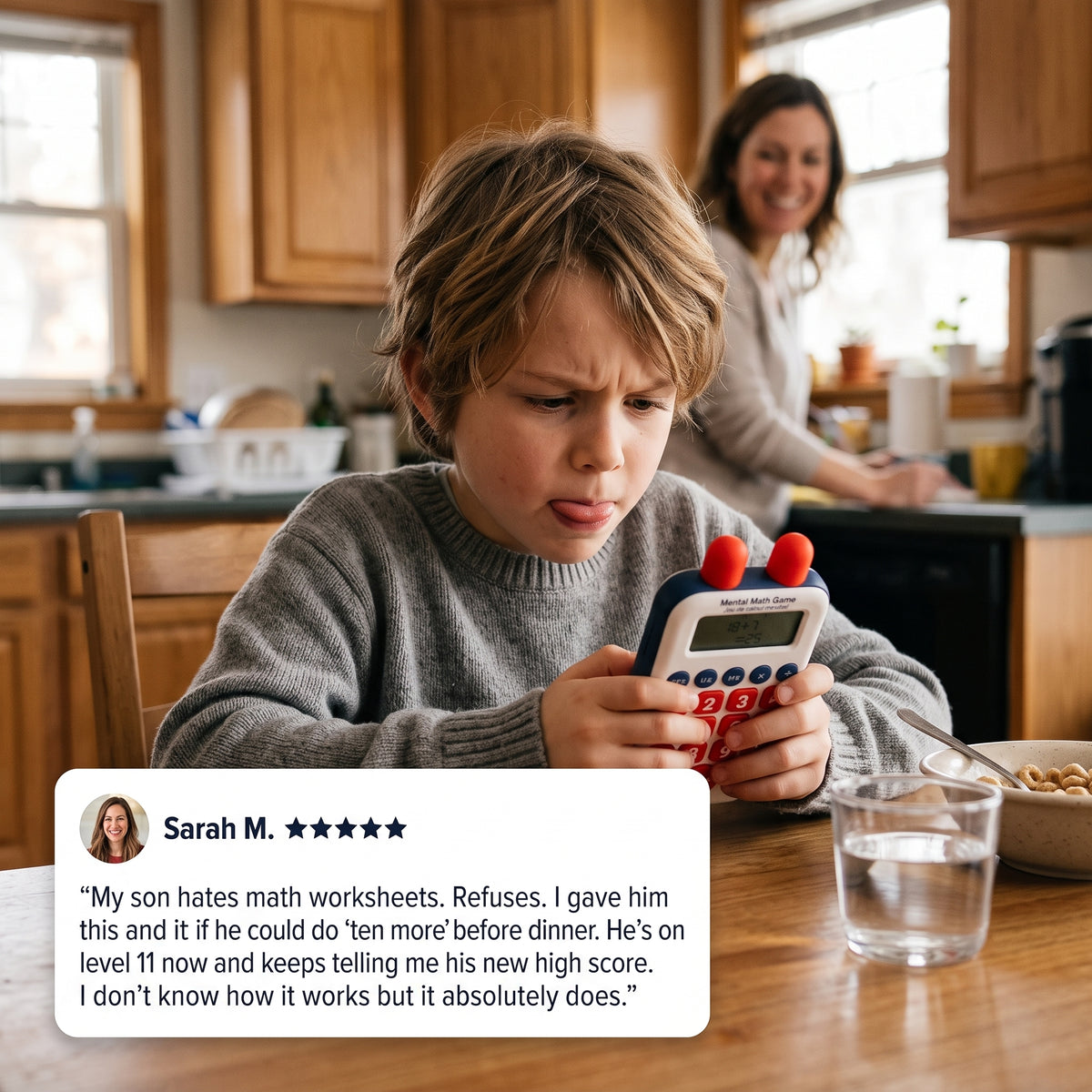
My son hates math worksheets. Refuses. This device changed something — he's now on level 11 and keeps telling me his new high score. I genuinely don't know how it works but it does.
1.1k
79 Comments
LikeCommentShare -

6h ago
We made it a family Friday night challenge. She went from avoidance to competitive in two weeks. That is not something I expected to type.
864
46 Comments
LikeCommentShare -

3h ago
Then asked if there was a harder version. The progressive difficulty is exactly right — never too easy, never discouraging. Just right enough to keep going.
1.1k
26 Comments
LikeCommentShare


FAQs
What ages is this designed for?
What ages is this designed for?
Best suited for children aged 6–12 — from early addition learners through to kids building multiplication and division speed. The 24-level progression makes it appropriate across that full range.
Does it cover all 4 math operations?
Does it cover all 4 math operations?
Yes — addition, subtraction, multiplication, and division are all included in one device.
How does the timed challenge work?
How does the timed challenge work?
Children answer auto-generated problems against a built-in timer. The goal is to answer correctly and quickly — building the math fluency and calculation speed that classroom practice alone rarely develops.
Is this better than flashcards or worksheets?
Is this better than flashcards or worksheets?
For most children, significantly more engaging. The combination of automatic problem generation, progressive difficulty, and timed competition removes the repetitive, static quality that makes flashcards and worksheets feel like a chore.
Less dreading. More leveling up
3 million problems. 24 levels. Zero worksheets.
Give them math practice that actually feels like winning.